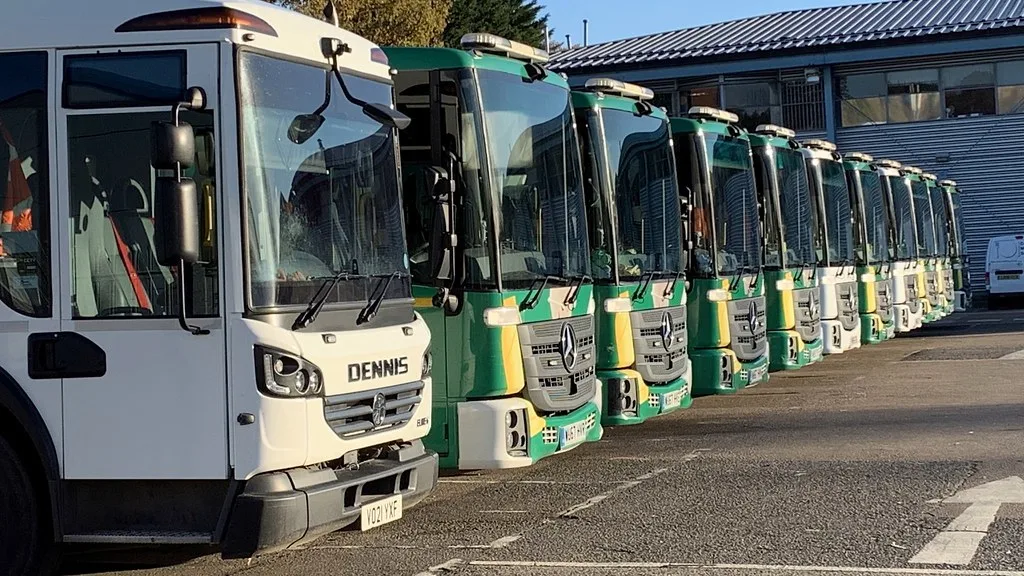

Guildford council will replace 161 vehicles by 2029, including 39 bin lorries, at a cost of about £24m. Most bin lorries stay diesel: an electric one costs £200,000 more. What was approved on 20 August.
Guildford Borough Council has approved a plan to replace 161 of its vehicles by 2029, from bin lorries and street sweepers to pool cars and community minibuses. The whole programme is costed at about £24 million. Only £10 million of that is in the bank; the rest falls to the new West Surrey Council to find.
The council’s Executive signed off the fleet replacement programme on 20 August. The council announced the decision the next day.
Why now
The report is blunt about the state of the current fleet. Guildford runs 191 vehicles, 30 of them for housing services and 35 of them large plant such as tractors, trailers and big mowers. It says “the majority of plant and vehicles are beyond their expected and extended life”, and that housing repairs, waste collection, street cleaning, parks, community transport and parking have all “suffered service impacts and complaints as a result of vehicle breakdown”.
Councils normally replace large goods vehicles every seven to eight years and smaller vehicles every five to seven, the report says. Full Council set aside £10.0 million for vehicle replacement in February 2026. Replacing the whole fleet would cost “in the region of £24.0m over a period to 2029”, and the remaining £14.0 million “will be subject to consideration and allocation by West Surrey Council”, the authority that takes over from Guildford on 1 April 2027.
What gets replaced, and when
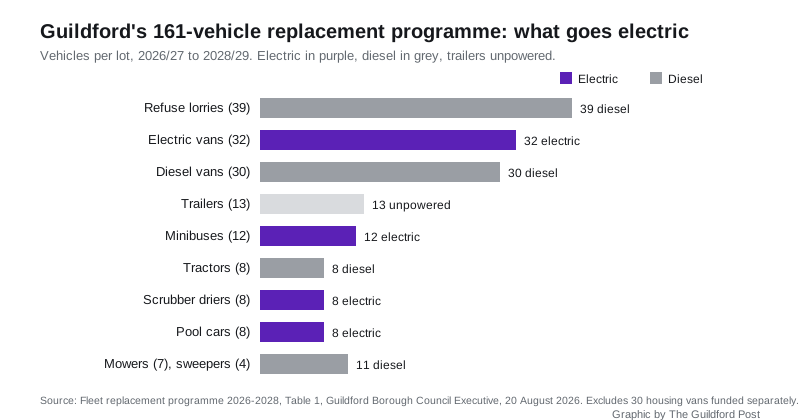
The programme is split into 15 lots. The first wave, in 2026/27, is the operational heart of the fleet:
- 30 diesel vans of 1.5 to 3.5 tonnes for waste, street cleaning and parks
- 32 electric vans up to 4.2 tonnes for parking, parks, trees, street cleaning and public toilets (six are already electric)
- 25 diesel refuse lorries: 14 at 26 tonnes, 5 at 18 tonnes and 6 small ones of 4.6 to 7.5 tonnes
- 4 mechanical sweepers, 8 tractors and 7 ride-on mowers, all diesel
- 8 electric scrubber driers for street cleaning and public conveniences
Later waves cover 8 electric pool cars in 2027/28, then 12 electric minibuses for community transport, 13 trailers and a further 14 diesel 26-tonne refuse lorries in 2028/29. A separate lot of 30 electric vans for housing services, due in 2027/28, is funded from the housing account rather than general borrowing.
Why the bin lorries stay diesel
The council says its approach is “an electric vehicle first approach unless the electric approach is not viable either financially or operationally”. For the 39 refuse lorries, it has decided it is not viable yet. The report sets out the arithmetic:
- an electric refuse lorry costs about £200,000 more than a diesel one, so electrifying all 39 would add roughly £7.8 million
- a diesel refuse lorry burns £15,000 to £17,000 or more of fuel a year; an electric one uses £12,000 to £15,000 of electricity
- across the fleet, that is a fuel saving of £80,000 to £100,000 a year against an extra £1 million a year of capital
Two operational points count against electric lorries too. Battery packs cut the payload, so more lorries and crews would be needed to cover the same rounds. And the borough’s “large geography and dispersed collection and tipping/disposal/transfer points” push against battery range. The report notes that the Euro 7 emissions standard due this year will improve the carbon position of new diesels, and that the council’s new depot will have charging infrastructure ready for larger vehicles once prices fall.
Of the 161 vehicles in the main programme, the council says “a minimum of 60 could be electrically powered by 2028”. The 14 refuse lorries due in 2028 are pencilled in as the first of the heavy fleet that might switch to alternative power.
Cllr Angela Goodwin, Lead Councillor for Environment and Sustainability, said: “Many of the vehicles we rely on every day to deliver essential services are now beyond their normal operating life.”
What happens next
The Executive’s decision lets procurement start. It does not commit the money. The report says a recommendation on contract awards, and on whether to buy or lease each lot, will come back to the Executive, “subject to the approval of both full Council to any necessary funding and West Surrey Council for S24 consent”. Section 24 consent is the sign-off the shadow West Surrey authority must give to major financial decisions by the councils it is replacing.
What it means for you
- Missed collections: the report links breakdowns directly to missed rounds and complaints. New lorries in 2026/27 are the fix. Current collection days are on our Guildford bin collection days page.
- Council tax: the £14 million shortfall is a decision for West Surrey Council, whose first budget will be set for 2027/28. How the borough element of your bill is built is on our council tax bands page.
- Air quality: of the 62 vans in the first wave, 32 go electric and 30 stay diesel. The lorries that do the heaviest miles stay diesel until at least the next replacement cycle.
- Parking: the vans used by the parking service are in the 32-vehicle electric lot, so expect a quieter fleet on the streets from next year. Charges and car parks are on our parking in Guildford page.
Have your say